
Machine Safety Interlocks: Safety is Key
Machine Safety Interlocks: Safety is Key
At KLS Machines Inc., safety is not just a feature—it’s a fundamental principle that guides everything we do. We design and build Encapsulation Machines with safety at the forefront, ensuring operators, technicians, and other personnel can work confidently and efficiently. Our equipment, like the KLS-225, incorporates advanced safety interlocks to eliminate unnecessary risks while maintaining peak performance. When used correctly, these systems are critical in creating a secure work environment.
This article delves into the vital role of machine safety interlocks, with references from the KLS-225 owner’s manual, to illustrate how adhering to these systems protects people and equipment.
What Are Safety Interlocks, and Why Are They Essential?
Machine safety interlocks ensure that the Encapsulation machines operate only under safe conditions. They protect everyone involved from potentially hazardous situations by preventing the machine from running if something is not right, such as an open door or a tripped switch.
At KLS Machines Inc., our interlocks are designed to seamlessly integrate with the machine’s operation. However, their success depends on the user’s commitment to following proper procedures. Safety interlocks are not just safeguards—they’re an integral part of our mission to deliver reliability and peace of mind.
The Role of the Safety PLC
The Safety Programmable Logic Controller (Safety PLC) is the heart of the KLS-225’s safety system. It continuously monitors the status of all safety interlocks to confirm that the machine is safe before and during operation.
If the Safety PLC detects an issue—such as a tripped interlock, fault, or malfunction—it immediately halts the machine. This automatic response prevents accidents and ensures the machine cannot operate in unsafe conditions.
The KLS-225 will not run without a fully functioning Safety PLC. This design reinforces our commitment to making safety an unbreakable standard in every piece of equipment we produce.
Using the Two-Hand Jog Mode: Proceed with Caution
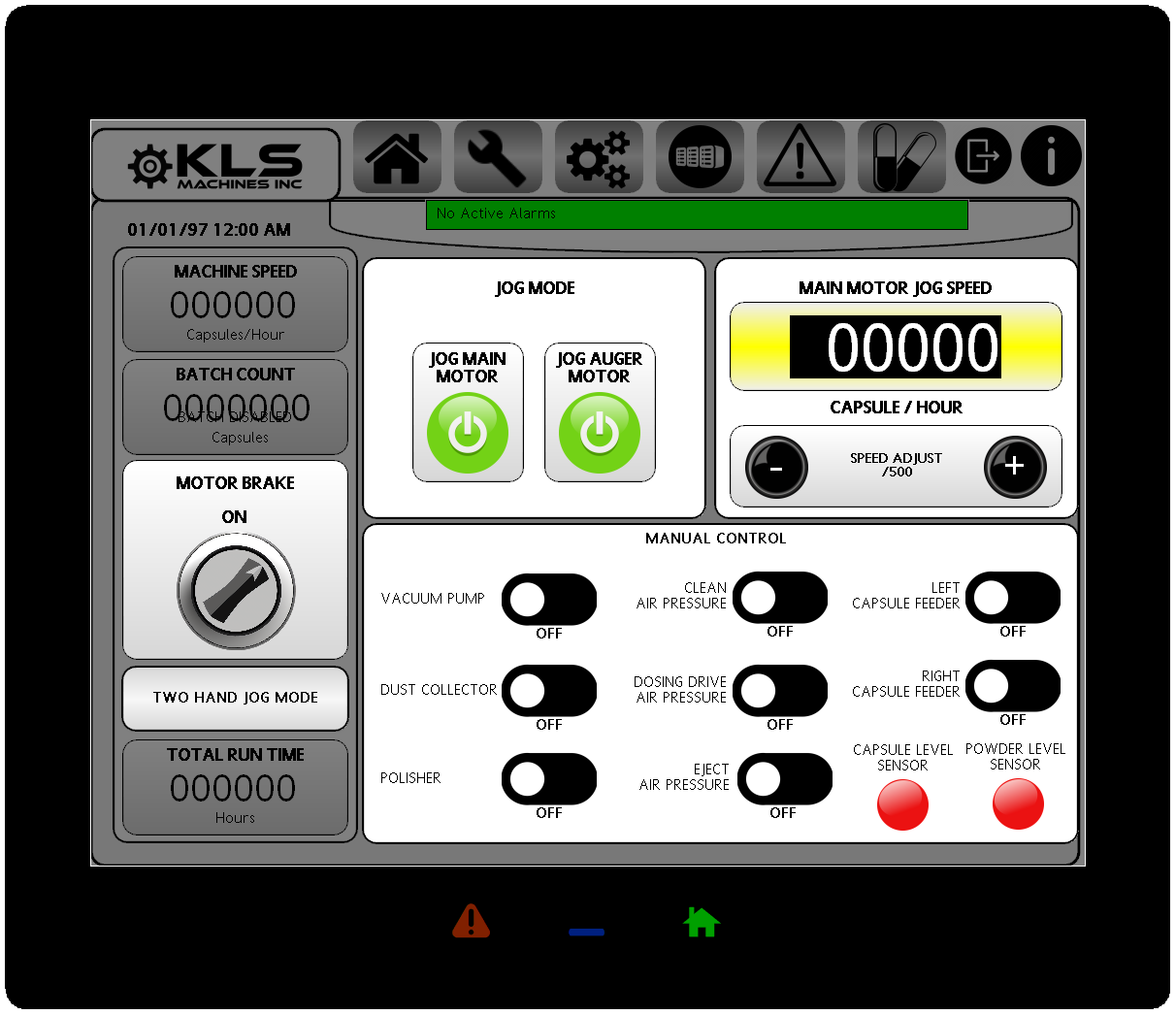
The KLS-225’s Two-Hand Jog Mode is a specialized feature designed for troubleshooting only. It allows trained technicians to jog the machine while the safety doors are open, providing access to critical components during diagnostics.
It is vital to understand that this mode is not intended for routine setups or changeovers. For those tasks, the Main Motor Handwheel should always be used. The handwheel provides better control and significantly reduces the risk of injury or damage.
Guidelines for Safely Operating the Two-Hand Jog Controller
Operating the Two-Hand Jog Controller demands strict adherence to safety protocols. To ensure a safe environment:
1. Clear the Area:
Before engaging the jog controller, the technician must verify that no one is inside or near the machine.
2. Announce “All Clear”:
The technician should audibly declare “All Clear” to notify everyone in the room of the operation.
3. Wait for Confirmation:
Everyone present must respond with “Clear” to confirm they are safely away from the machine.
4. Engage Cautiously:
Only after receiving confirmation from everyone should the technician use the jog controller.
Who Can Use the Two-Hand Jog Mode?
The KLS-225 owner’s manual explicitly states that only experienced and highly trained technicians should operate the machine using the Two-Hand Jog Controller.
“No operator or personnel without advanced experience and expertise should operate this machine with the Two-Hand Jog Controller. Failure to follow this guideline may result in serious injury!”
This warning highlights a crucial truth: even the best safety systems rely on responsible human behavior. Proper training, attention to detail, and clear communication are as necessary as technology.
Key Takeaways for Safe Machine Operation
1. Trust the Safety PLC:
Regularly check that the Safety PLC is functioning correctly. Never attempt to bypass or override its safeguards.
2. Use Two-Hand Jog Mode Sparingly:
This mode is strictly for troubleshooting, not routine operations. Always follow all safety protocols.
3. Train for Safety:
Ensure only skilled and qualified personnel operate the machine in advanced modes like the Two-Hand Jog.
4. Communicate Clearly:
Simple practices, like announcing “All Clear” and waiting for confirmation, are essential in preventing accidents.
Conclusion: Safety Is Everyone’s Responsibility
At KLS Machines Inc., we build machines prioritizing safety without compromising performance. Features like the Safety PLC and the Two-Hand Jog Mode are engineered to protect lives and ensure reliable operations. However, these safeguards are most effective when used responsibly and with a strong commitment to safety protocols.
Operators and technicians can create a safer workplace by understanding and respecting these systems. Always remember: safety is not just a guideline—it’s the foundation of everything we do.